
Flying the Harvest CAV Before Its Prototype: A Case Study
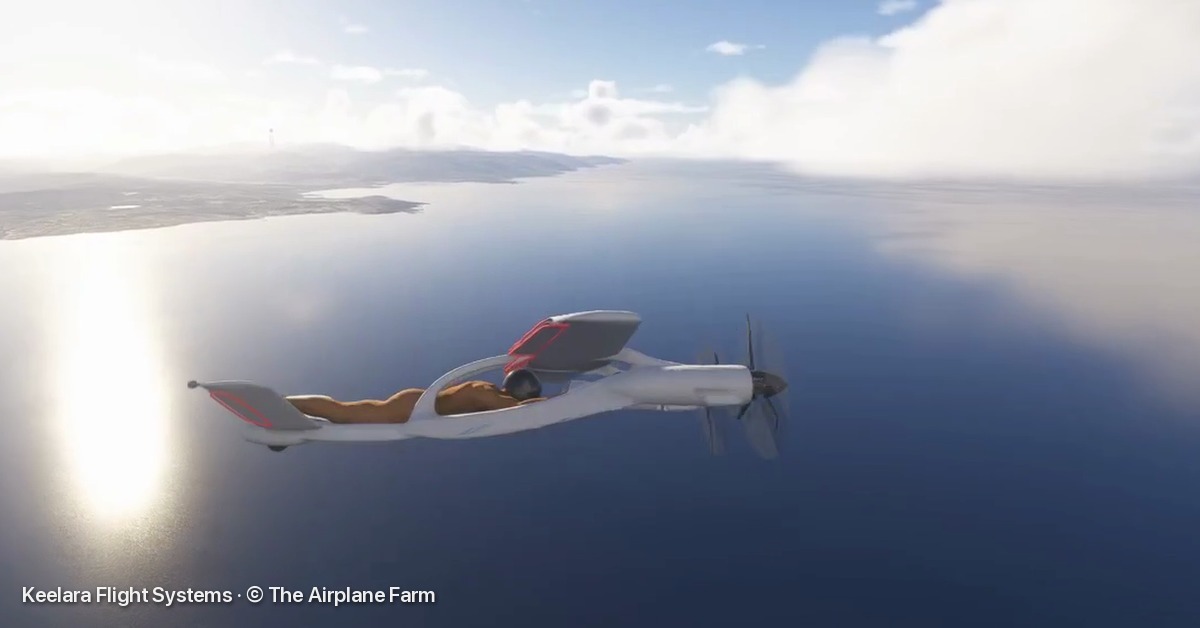
The Harvest CAV is flying in Microsoft Flight Simulator 2024 while its real prototype is still being built. Keelara works with The Airplane Farm of Sparks, Nevada, on the Harvest's simulator. This post walks through what that work involved and why a flying simulator model is useful long before first flight. The full case study, with flight video and a VR clip, is on the Harvest case study page.
The aircraft
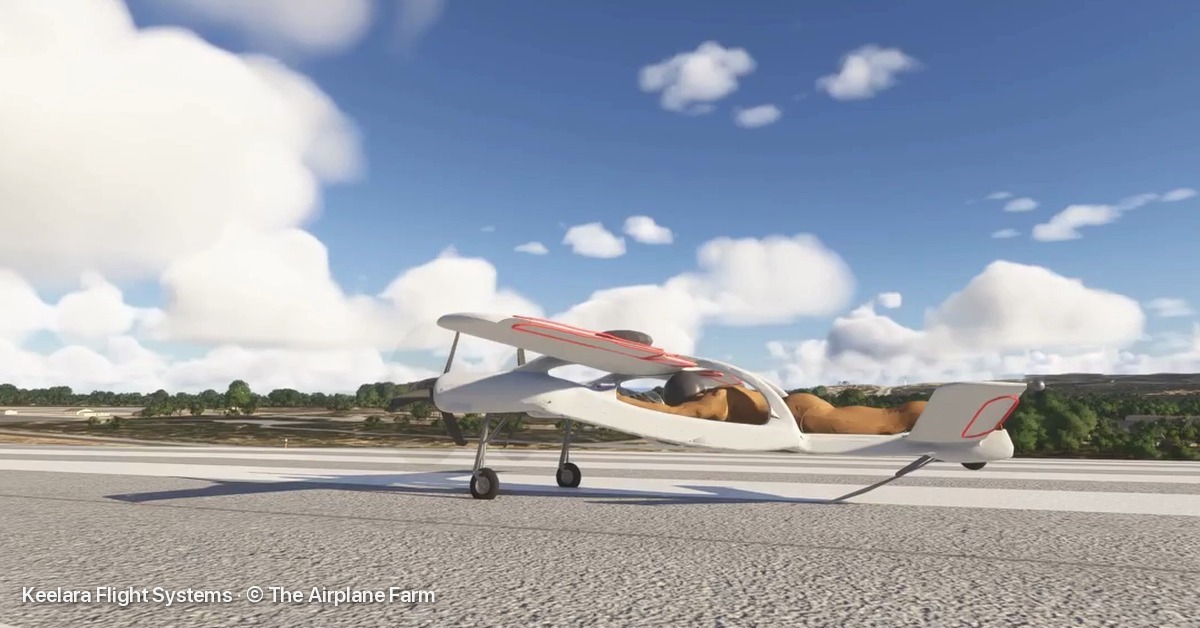
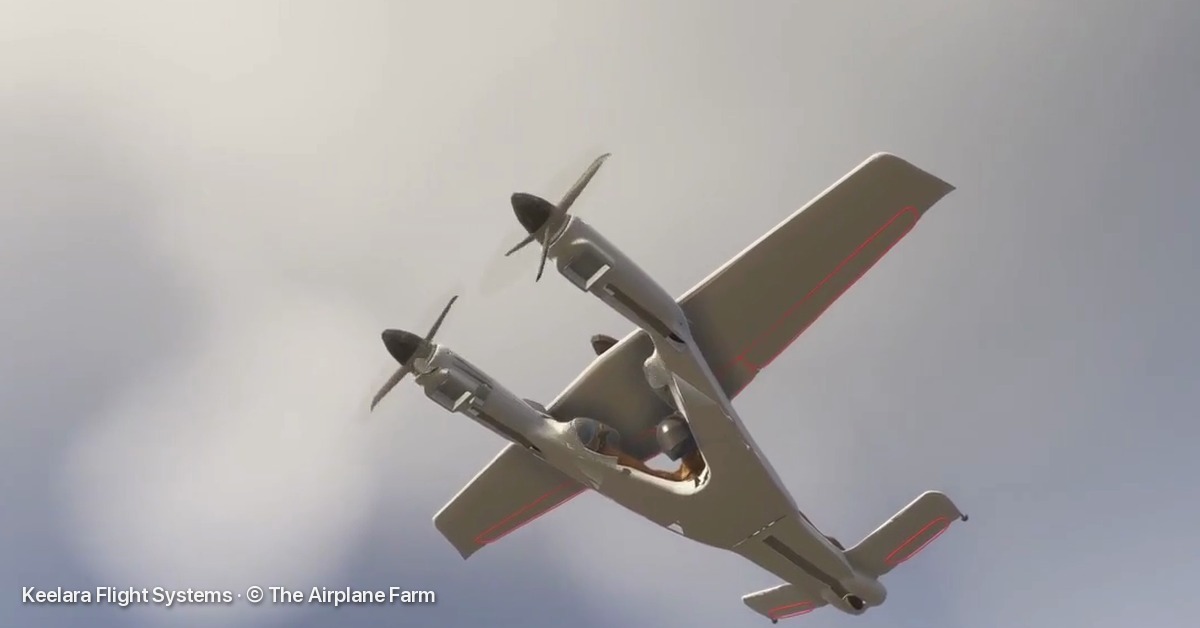
The Harvest CAV is an all-electric powered-lift aircraft designed by The Airplane Farm and built on its Electric PowerWing (Patent Pending). It takes off and lands vertically or on a short field. The pilot flies lying prone, and the fly-by-wire controls are what the designer calls Simplified Flight Controls. The Harvest is in design, with prototype construction and initial testing underway.
The Airplane Farm publishes four figures for the Harvest: an efficient cruise speed of 75.0 mph, a maximum horizontal sprint of 111.3 mph, a continuous cruise range of 75.9 miles and 60.7 minutes of flight time to discharge. Those are The Airplane Farm's own published figures, not outputs of our model.
The brief
Show the aircraft flying before the prototype does, and give the designer an engineering model to test ideas on.
Every phase of flight
An aircraft that takes off vertically from its tail and then flies on its wing has to work in the simulator through every phase, not just in cruise. We built the Harvest from the designer's CAD so that it lifts off vertically, transitions to wing-borne flight and lands, all inside Microsoft Flight Simulator 2024.
A HUD for a pilot lying prone
Flying prone changes where a pilot looks and what they need to see, so an off-the-shelf head-up display wasn't going to fit. We designed a custom HUD for the prone pilot, with separate layouts for hover, transition and cruise. It adds a terrain visor with terrain-clearance warnings, flight-path and energy displays, takeoff and landing guidance, checklists, and a display of the pilot's own inputs. In the simulator the Harvest also has auto level, auto-throttle, automatic takeoff and autoland.
Flown in VR
The same aircraft can be flown in virtual reality. On a headset, the designer and their pilots can sit in the Harvest and fly it over real scenery: lift-off, a banked turn, the terrain visor over the hills and a descent to land. That's a very different experience from looking at a rendering.
The engineering twin
Alongside the simulator model, we built an engineering twin: a JSBSim flight-dynamics model of the Harvest, built from the designer's data. It runs inside the simulator and flies the aircraft in place of the simulator's own flight model. On the twin we prototyped a fly-by-wire control system with envelope protection for speed, angle of attack and bank angle. Every test flight is recorded and shared with the designer.
"As designed"
The Harvest model is built from design data. It hasn't been matched to flight-test data, because the real aircraft hasn't flown yet. We describe it as "as designed" and never as "as flown", and we're clear that a simulator can't certify an aircraft or stand in for flight test. What it can do is put a design in the air, in front of investors, buyers and its own pilots, months before the real one leaves the hangar.
Want your aircraft flying like this?
Keelara Flight Systems builds aircraft for Microsoft Flight Simulator 2024 and X-Plane from a designer's CAD and data, plus engineering twins that can grow with a flight-test program. You can read how we started in Introducing Keelara Flight Systems, see the full Harvest case study, or get in touch.
The Harvest CAV, its design and its name, and the Electric PowerWing (Patent Pending) are the intellectual property of The Airplane Farm, shown here with permission. Harvest CAV and Electric PowerWing: Copyright © 2026 The AIRPLANE Farm - All Rights Reserved.
Microsoft Flight Simulator is a trademark of Microsoft Corporation. X-Plane is a trademark of Laminar Research. Keelara is not affiliated with Microsoft or Laminar Research.